Total Pageviews

Monday, September 2, 2013

11 stomach-soothing steps for heartburn

Heartburn, that uncomfortable burning sensation that radiates up the middle of the chest, is the most common digestive malady. It’s the result of a condition known as gastroesophageal reflux disease (GERD), often called reflux, in which stomach acid surges upward from the stomach into the esophagus.
While heartburn should not be ignored, there are many stomach-soothing steps you can try before going to a doctor. These can help cool your symptoms and prevent bigger problems later on. 
1. Eat smaller meals, but more often. A full stomach puts pressure on the lower esophageal sphincter (LES), a valve-like muscle that keeps stomach acid from backing up into the esophagus.
2. Eat in a slow, relaxed manner. Wolfing down your food fills your stomach faster, putting more pressure on the LES.
3. Remain upright after meals. Lying down increases pressure on the LES, which makes acid reflux more likely.
4. Avoid late-night eating. Eating a meal or snack within three hours of lying down to sleep can worsen reflux and heartburn symptoms. Leave enough time for the stomach to clear out.
5. Don’t exercise immediately after meals. Give your stomach time to empty; wait a couple of hours after eating before exercising.
6. Tilt your torso with a bed wedge. Raising your torso up a bit with a wedge-shaped cushion reduces the pressure on the LES and may ease nighttime heartburn. Wedges are available from medical supply companies. Don’t just prop your head and shoulders up with pillows, which can actually worsen reflux.
7. Stay away from carbonated beverages. They cause belching, which promotes reflux of stomach acid.
8. Find the foods that trigger your symptoms and avoid them. Some foods and drinks increase acid secretion, delay stomach emptying, or loosen the LES — conditions that set the stage for heartburn. Common offenders include fatty foods, spicy foods, tomatoes, garlic, milk, coffee, tea, cola, peppermint, and chocolate.
9. Chew sugarless gum after a meal. Chewing gum promotes salivation, which neutralizes acid, soothes the esophagus, and washes acid back down to the stomach. Avoid peppermint flavors, which may trigger heartburn.

Watermelon Juice Relieves Post-Exercise Muscle Soreness

Watermelon juice's reputation among athletes is getting scientific support in a new study, which found that juice from the summer favorite fruit can relieve post-exercise muscle soreness. The report in ACS' Journal of Agricultural and Food Chemistry attributes watermelon's effects to the amino acid L-citrulline.

Encarna Aguayo and colleagues cite past research on watermelon juice's antioxidant properties and its potential to increase muscle protein and enhance athletic performance. But scientists had yet to explore the effectiveness of watermelon juice drinks enriched in L-citrulline. Aguayo's team set out to fill that gap in knowledge.
They tested natural watermelon juice, watermelon juice enriched in L-citrulline and a control drink containing no L-citrulline on volunteers an hour before exercise. Both the natural juice and the enriched juice relieved muscle soreness in the volunteers. L-citrulline in the natural juice (unpasteurized), however, seemed to be more bioavailable -- in a form the body could better use, the study found.

Sunday, September 1, 2013

Early Diabetes Interventions May Also Reduce Heart Disease Risk

Two treatments that slow the development of diabetes also may protect people from heart disease, according to a recent study accepted for publication in The Endocrine Society's Journal of Clinical Endocrinology & Metabolism (JCEM).

Researchers examined the effect that making intensive lifestyle changes or taking the medication metformin had on cholesterol and triglyceride levels. The study, part of the National Institutes of Health's Diabetes Prevention Program, found that both treatments induced positive changes in the level of particles that carry cholesterol and triglycerides through the blood stream. These changes could lower the chances of plaque building up in blood vessels.
"Cardiovascular disease is the most significant cause of death and disability in people with diabetes," said the study's lead author, Ronald Goldberg, MD, of the University of Miami's Miller School of Medicine. "Our findings demonstrate that the same therapies used to slow the onset of diabetes also may help allay the risk of heart disease."
The randomized clinical trial analyzed blood samples from 1,645 people with impaired glucose tolerance. Participants were randomly assigned to one of three groups -- one taking the medication metformin, another taking a placebo and a third undergoing an intensive lifestyle modification program. Researchers compared baseline blood samples from the start of the study to samples taken a year later to measure the interventions' effects. The study used advanced techniques to obtain a detailed picture of the various particles in the blood.
People who took part in the lifestyle modification program had lower levels of triglycerides and the particles that carry this kind of fat in the blood after a year. Both the metformin and lifestyle interventions were linked to reductions in the number of small low-density lipoprotein (LDL) particles, which carry cholesterol that may contribute to plaque formation, and increases in high-density lipoproteins (HDL), the form of cholesterol that reduces heart disease risk.
"Preventing or slowing the development of diabetes with these treatments also improves the cholesterol and triglyceride profile of a person's blood," Goldberg said. "Thanks to the added benefits of existing diabetes interventions, we stand a better chance of lowering the risk of heart disease in this patient population."

Poor Concentration: Poverty Reduces Brainpower Needed for Navigating Other Areas of Life

Poverty and all its related concerns require so much mental energy that the poor have less remaining brainpower to devote to other areas of life, according to research based at Princeton University. As a result, people of limited means are more likely to make mistakes and bad decisions that may be amplified by -- and perpetuate -- their financial woes.

Published in the journal Science, the study presents a unique perspective regarding the causes of persistent poverty. The researchers suggest that being poor may keep a person from concentrating on the very avenues that would lead them out of poverty. A person's cognitive function is diminished by the constant and all-consuming effort of coping with the immediate effects of having little money, such as scrounging to pay bills and cut costs. Thusly, a person is left with fewer "mental resources" to focus on complicated, indirectly related matters such as education, job training and even managing their time.
In a series of experiments, the researchers found that pressing financial concerns had an immediate impact on the ability of low-income individuals to perform on common cognitive and logic tests. On average, a person preoccupied with money problems exhibited a drop in cognitive function similar to a 13-point dip in IQ, or the loss of an entire night's sleep.
But when their concerns were benign, low-income individuals performed competently, at a similar level to people who were well off, said corresponding author Jiaying Zhao, who conducted the study as a doctoral student in the lab of co-author Eldar Shafir, Princeton's William Stewart Tod Professor of Psychology and Public Affairs. Zhao and Shafir worked with Anandi Mani, an associate professor of economics at the University of Warwick in Britain, and Sendhil Mullainathan, a Harvard University economics professor.
"These pressures create a salient concern in the mind and draw mental resources to the problem itself. That means we are unable to focus on other things in life that need our attention," said Zhao, who is now an assistant professor of psychology at the University of British Columbia.
"Previous views of poverty have blamed poverty on personal failings, or an environment that is not conducive to success," she said. "We're arguing that the lack of financial resources itself can lead to impaired cognitive function. The very condition of not having enough can actually be a cause of poverty."
The mental tax that poverty can put on the brain is distinct from stress, Shafir explained. Stress is a person's response to various outside pressures that -- according to studies of arousal and performance -- can actually enhance a person's functioning, he said. In the Science study, Shafir and his colleagues instead describe an immediate rather than chronic preoccupation with limited resources that can be a detriment to unrelated yet still important tasks.
"Stress itself doesn't predict that people can't perform well -- they may do better up to a point," Shafir said. "A person in poverty might be at the high part of the performance curve when it comes to a specific task and, in fact, we show that they do well on the problem at hand. But they don't have leftover bandwidth to devote to other tasks. The poor are often highly effective at focusing on and dealing with pressing problems. It's the other tasks where they perform poorly."
The fallout of neglecting other areas of life may loom larger for a person just scraping by, Shafir said. Late fees tacked on to a forgotten rent payment, a job lost because of poor time-management -- these make a tight money situation worse. And as people get poorer, they tend to make difficult and often costly decisions that further perpetuate their hardship, Shafir said. He and Mullainathan were co-authors on a 2012 Science paper that reported a higher likelihood of poor people to engage in behaviors that reinforce the conditions of poverty, such as excessive borrowing.
"They can make the same mistakes, but the outcomes of errors are more dear," Shafir said. "So, if you live in poverty, you're more error prone and errors cost you more dearly -- it's hard to find a way out."
The first set of experiments took place in a New Jersey mall between 2010 and 2011 with roughly 400 subjects chosen at random. Their median annual income was around $70,000 and the lowest income was around $20,000. The researchers created scenarios wherein subjects had to ponder how they would solve financial problems, for example, whether they would handle a sudden car repair by paying in full, borrowing money or putting the repairs off. Participants were assigned either an "easy" or "hard" scenario in which the cost was low or high -- such as $150 or $1,500 for the car repair. While participants pondered these scenarios, they performed common fluid-intelligence and cognition tests.
Subjects were divided into a "poor" group and a "rich" group based on their income. The study showed that when the scenarios were easy -- the financial problems not too severe -- the poor and rich performed equally well on the cognitive tests. But when they thought about the hard scenarios, people at the lower end of the income scale performed significantly worse on both cognitive tests, while the rich participants were unfazed.
To better gauge the influence of poverty in natural contexts, between 2010 and 2011 the researchers also tested 464 sugarcane farmers in India who rely on the annual harvest for at least 60 percent of their income. Because sugarcane harvests occur once a year, these are farmers who find themselves rich after harvest and poor before it. Each farmer was given the same tests before and after the harvest, and performed better on both tests post-harvest compared to pre-harvest.
The cognitive effect of poverty the researchers found relates to the more general influence of "scarcity" on cognition, which is the larger focus of Shafir's research group. Scarcity in this case relates to any deficit -- be it in money, time, social ties or even calories -- that people experience in trying to meet their needs. Scarcity consumes "mental bandwidth" that would otherwise go to other concerns in life, Zhao said.
"These findings fit in with our story of how scarcity captures attention. It consumes your mental bandwidth," Zhao said. "Just asking a poor person to think about hypothetical financial problems reduces mental bandwidth. This is an acute, immediate impact, and has implications for scarcity of resources of any kind."
"We documented similar effects among people who are not otherwise poor, but on whom we imposed scarce resources," Shafir added. "It's not about being a poor person -- it's about living in poverty."
Many types of scarcity are temporary and often discretionary, said Shafir, who is co-author with Mullainathan of the book, "Scarcity: Why Having Too Little Means So Much," to be published in September. For instance, a person pressed for time can reschedule appointments, cancel something or even decide to take on less.
"When you're poor you can't say, 'I've had enough, I'm not going to be poor anymore.' Or, 'Forget it, I just won't give my kids dinner, or pay rent this month.' Poverty imposes a much stronger load that's not optional and in very many cases is long lasting," Shafir said. "It's not a choice you're making -- you're just reduced to few options. This is not something you see with many other types of scarcity."
The researchers suggest that services for the poor should accommodate the dominance that poverty has on a person's time and thinking. Such steps would include simpler aid forms and more guidance in receiving assistance, or training and educational programs structured to be more forgiving of unexpected absences, so that a person who has stumbled can more easily try again.
"You want to design a context that is more scarcity proof," said Shafir, noting that better-off people have access to regular support in their daily lives, be it a computer reminder, a personal assistant, a housecleaner or a babysitter.
"There's very little you can do with time to get more money, but a lot you can do with money to get more time," Shafir said. "The poor, who our research suggests are bound to make more mistakes and pay more dearly for errors, inhabit contexts often not designed to help."

Eating Whole Fruits Linked to Lower Risk of Type 2 Diabetes

Eating more whole fruits, particularly blueberries, grapes, and apples, was significantly associated with a lower risk of type 2 diabetes, according to a new study led by Harvard School of Public Health (HSPH) researchers. Greater consumption of fruit juices was associated with a higher risk of type 2 diabetes. The study is the first to look at the effects of individual fruits on diabetes risk.
"While fruits are recommended as a measure for diabetes prevention, previous studies have found mixed results for total fruit consumption. Our findings provide novel evidence suggesting that certain fruits may be especially beneficial for lowering diabetes risk," said senior author Qi Sun, assistant professor in the Department of Nutrition at HSPH and assistant professor at the Channing Division of Network Medicine, Brigham and Women's Hospital.
The study appears online August 29, 2013 in BMJ (British Medical Journal).
The researchers examined data gathered between 1984 and 2008 from 187,382 participants in three long-running studies (Nurses' Health Study, Nurses' Health Study II, and Health Professionals Follow-up Study). Participants who reported a diagnosis of diabetes, cardiovascular disease, or cancer at enrollment were excluded. Results showed that 12,198 participants (6.5%) developed diabetes during the study period.
The researchers looked at overall fruit consumption, as well as consumption of individual fruits: grapes or raisins; peaches, plums, or apricots; prunes; bananas; cantaloupe; apples or pears; oranges; grapefruit; strawberries; and blueberries. They also looked at consumption of apple, orange, grapefruit, and "other" fruit juices.
People who ate at least two servings each week of certain whole fruits -- particularly blueberries, grapes, and apples -- reduced their risk for type 2 diabetes by as much as 23% in comparison to those who ate less than one serving per month. Conversely, those who consumed one or more servings of fruit juice each day increased their risk of developing type 2 diabetes by as much as 21%. The researchers found that swapping three servings of juice per week for whole fruits would result in a 7% reduction in diabetes risk.
The fruits' glycemic index (a measure of how rapidly carbohydrates in a food boost blood sugar) did not prove to be a significant factor in determining a fruit's association with type 2 diabetes risk. However, the high glycemic index of fruit juice -- which passes through the digestive system more rapidly than fiber-rich fruit -- may explain the positive link between juice consumption and increased diabetes risk.
The researchers theorize that the beneficial effects of certain individual fruits could be the result of a particular component. Previous studies have linked anthocyanins found in berries and grapes to lowered heart attack risk, for example. But more research is necessary to determine which components in the more beneficial fruits influence diabetes risk.
"Our data further endorse current recommendations on increasing whole fruits, but not fruit juice, as a measure for diabetes prevention," said lead author Isao Muraki, research fellow in the Department of Nutrition at HSPH. "And our novel findings may help refine this recommendation to facilitate diabetes prevention."

Friday, August 30, 2013

Running: a great sport to start in later life

Lots of people start running in their 30s or older, and it is one of the few sports in which you can improve with age – and even progress to elite level
A 65-year-old runner
'Age is far less of a barrier to improvement in running than it is in other sports.' 
For many people reminiscing about their childhood sporting memories, the first activity that springs to mind is the dreaded cross-country run. Images of cold, wet days spent slogging around muddy fields; the sound of sadistic PE teachers barking instructions still ringing in the ear. These are not fond memories. Indeed, running was, and still is, frequently viewed as a punishment; the sort of thing that no child in their right mind would want to do voluntarily, let alone enjoy.
One of the ironies of the current boom in participation is that while unprecedented numbers of people are taking up running, many of these people are in their 30s or above. It was hoped that the 2012 Olympics would "inspire a generation" – but it wasn't really part of the plan for that generation to be aged 30-60. Recent reports suggest that child fitness levels still aren't what they should be, with nearly half of all children not taking the government's recommended one hour of exercise a day.
Although any new runners are fairly good news for public health officials, the age profile of the current crop means they are less likely to make inroads into the thorny issue of running "standards". It has been well documented that times are generally slower now than they were in the 80s, but the fact that runners are starting older doesn't always mean that they can't pop up at the sharp end of races.
Running is one of the few sports at which it is possible, albeit with a lot of hard work and a bundle of talent, to progress to elite status despite only taking it up in your 30s. One of the best examples is the great Jack Foster, the Liverpool-born New Zealander and self-styled "ancient marathoner", who pulled on a pair of trainers for the first time at the age of 32 and by age 40 found himself running 2:11 for the marathon, picking up a silver medal for his efforts at the Christchurch Commonwealth Games in 1974.
At a slightly lower level, Welshman Martin Rees this year became the proud holder of the age 60 World Best times for the half marathon (71:30) and 10km (32:54), after a glorious couple of decades during which heas run incredible times over a full range of distances from 5k (14:20) to the marathon (2:23). He only took up the sport in his late 30s and soon got the running bug.
Of course, while we all may hold secret hopes of uncovering an latent talent, most of us are unlikely to progress to the very front of the pack. But the exploits of the likes of Foster and Rees are relevant to all of us, whether we like to race on a weekend or prefer to battle our own limitations on solitary excursions through the countryside.
The message is that age is far less of a barrier to improvement in running than it is in other sports. While the amateur footballer is confronted, aged 40, with his or her place in the team being given to the latest young talent, the amateur runner is often just getting going.
With running, especially if taken up later in life without any previous experience, it really is realistic to expect to improve with age – albeit with some upper limit, though Rees seems to be getting faster and faster. It is this expectation that can ensure the motivation to continue remains well into our senior years.
Who knows where it will take you? The never-ending setting of targets and the tangible results keep us coming back for more and more.

Dean Karnazes: the man who can run for ever

Most runners have to stop when they reach their lactate threshold, but Dean Karnazes' muscles never tire: he can run for three days and nights without stopping. What's his secret?

Dean Karnazes running View larger picture
 
From club runners to Olympians, every athlete has a limit. Scientifically, this limit is defined as the body's lactate threshold and when you exercise beyond it, running rapidly becomes unpleasant. We've all experienced that burning feeling – heart pounding, lungs gasping for air – as your muscles begin to fatigue, eventually locking up altogether as your body shuts down. However, there is one man whose physiological performance defies all convention: Dean Karnazes is an ultrarunner from California and, at times, it seems as if he can run forever.
Karnazes has completed some of the toughest endurance events on the planet, from a marathon to the South Pole in temperatures of -25C to the legendary Marathon des Sables, but in his entire life he has never experienced any form of muscle burn or cramp, even during runs exceeding 100 miles. It means his only limits are in the mind.
"At a certain level of intensity, I do feel like I can go a long way without tiring," he says. "No matter how hard I push, my muscles never seize up. That's kind of a nice thing if I plan to run a long way."
When running, you break down glucose for energy, producing lactate as a byproduct and an additional source of fuel that can also be converted back into energy. However, when you exceed your lactate threshold, your body is no longer able to convert the lactate as rapidly as it is being produced, leading to a buildup of acidity in the muscles. It is your body's way of telling you when to stop – but Karnazes never receives such signals.
"To be honest, what eventually happens is that I get sleepy. I've run through three nights without sleep and the third night of sleepless running was a bit psychotic. I actually experienced bouts of 'sleep running', where I was falling asleep while in motion, and I just willed myself to keep going."
While supreme willpower is a common trait among ultrarunners, Karnazes first realised that he was actually biologically different when preparing to run 50 marathons in 50 days across the US back in 2006. "I was sent to a testing center in Colorado," he recalls. "First, they performed an aerobic capacity test in which they found my results consistent with those of other highly trained athletes, but nothing extraordinary. Next, they performed a lactate threshold test. They said the test would take 15 minutes, tops. Finally, after an hour, they stopped the test. They said they'd never seen anything like this before."
As Laurent Messonnier from the University of Savoie explains, the difference is that your aerobic capacity is a measure of your cardiovascular system performance, while your lactate threshold is your ability to clear lactate from your blood and convert it back into energy.
"If you take a high-level runner and you train that guy for a long time, his cardiovascular system will improve until a certain point where it will be very difficult to improve it further, as it's determined by the heart and the blood vessels. So if you carry on training that guy, you will not improve his aerobic capacity but his performance will still improve, because the lactate threshold is not limited by the cardiovascular system – it's determined by the quality of the muscles."
Your body clears lactate from the blood via a series of chemical reactions driven by the mitochondria in your muscle cells. These reactions transform lactate back to glucose again and they are enhanced by specific enzymes. The clearance process also works more efficiently if your mitochondria have a larger capacity, increasing their ability to use lactate as a fuel.
Years of training will improve both your enzymes and mitochondria and so improve your clearance, but there is a limit to how much you can improve your lactate threshold by training alone. If you inherit these enzymes and a larger mass of mitochondria genetically, your personal limits will be far higher.
Karnazes fell in love with running from an early age, and at high school he began to show endurance capabilities which far surpassed those of his peers. At one charity fundraiser, while his fellow runners were able to manage 15 laps of the track at most, Karnazes completed 105. But in his mid-teens he stopped altogether until experiencing an epiphany on his 30th birthday. Gripped by a powerful desire to run once more, he set off into the night.
After 15 years of no training, most of us would not have been physically capable of getting too far, but Karnazes did not stop until 30 miles later. Although the blisters were excruciating, his muscles showed little sign of fatigue.
"Many elite distance runners will show some improvements in their ability to clear lactic acid from the system due to the 'training effect', but that only goes so far," he says. "The rest, as I am told, is left up to heredity. They say the best thing you can do as a long-distance runner is to choose your parents well!"
However, genetics alone does not tell the full story. Karnazes believes that his lactate clearance abilities could also be down to low body fat, low sweat rate, a highly alkaline diet and low exposure to environmental toxins. Genetics can give you the propensity for a natural advantage but you express your genes differently depending on your environment and your lifestyle.
The intriguing question is whether Karnazes' lactate clearance abilities would be the same now if he had not done so much running at an early age.
"If you take two twins – one grows up in Africa and one grows up in northern Europe – their athletic performance will potentially be very different, because they will express their genes differently as the environment, food, everything is different," Messonnier says.
An interesting experiment could be to repeat the lactate threshold test with Karnazes' brother.
"He plays competitive volleyball but has never really done an extensive amount of running," Karnazes says. "I would be curious if he exhibits some of those same abilities to clear lactic acid from his system."

Taking aim at belly fat

Unlike fat parked on the hips and thighs, fat around the middle produces substances that can create serious health risks.
No matter what your body shape, excess fat isn't good for your health. But saddlebags and ballooning bellies are not equivalent. When it comes to body fat, location counts, and each year brings new evidence that the fat lying deep within the abdomen is more perilous than the fat you can pinch with your fingers.
In most people, about 90% of body fat is subcutaneous, the kind that lies in a layer just beneath the skin. If you poke your belly, the fat that feels soft is subcutaneous fat. The remaining 10% — called visceral or intra-abdominal fat — lies out of reach, beneath the firm abdominal wall. It's found in the spaces surrounding the liver, intestines, and other organs. It's also stored in the omentum, an apron-like flap of tissue that lies under the belly muscles and blankets the intestines. The omentum gets harder and thicker as it fills with fat.
Although visceral fat makes up only a small proportion of body fat, it's a key player in a variety of health problems.
As women go through their middle years, their proportion of fat to body weight tends to increase — more than it does in men — and fat storage begins favoring the upper body over the hips and thighs. Even if you don't actually gain weight, your waistline can grow by inches as visceral fat pushes out against the abdominal wall.

Where's the fat?

illustration of abdomen showing visceral and subcutaneous fat
Visceral fat lies in the spaces between the abdominal organs and in an apron of tissue called the omentum. Subcutaneous fat is located between the skin and the outer abdominal wall.

The trouble with visceral fat

Body fat, or adipose tissue, was once regarded as little more than a storage depot for fat blobs waiting passively to be used for energy. But research has shown that fat cells — particularly visceral fat cells — are biologically active. "One of the most important developments [since the mid-1990s] is the realization that the fat cell is an endocrine organ, secreting hormones and other molecules that have far-reaching effects on other tissues," says Dr. Barbara B. Kahn, chief of the division of endocrinology, diabetes, and metabolism at the Beth Israel Deaconess Medical Center in Boston.
Before researchers recognized that fat acts as an endocrine gland, they thought that the main risk of visceral fat was influencing the production of cholesterol by releasing free fatty acids into the bloodstream and liver. We now know that there's far more to the story. Researchers have identified a host of chemicals that link visceral fat to a surprisingly wide variety of diseases.
Subcutaneous fat produces a higher proportion of beneficial molecules, and visceral fat a higher proportion of molecules with potentially deleterious health effects. Visceral fat makes more of the proteins called cytokines, which can trigger low-level inflammation, a risk factor for heart disease and other chronic conditions. It also produces a precursor to angiotensin, a protein that causes blood vessels to constrict and blood pressure to rise.
Researchers at Harvard have discovered that, compared with subcutaneous fat, visceral fat secretes more of retinol-binding protein 4 (RBP4), a molecule that increases insulin resistance. As the volume of visceral fat increases, so do levels of RBP4. The connection is so strong that researchers are developing a blood test for RBP4 as a way for physicians to measure an individual's store of visceral fat.
Subcutaneous fat produces more of certain beneficial molecules, including the hormone leptin, which acts on the brain to suppress appetite and burn stored fat. Adiponectin, another hormone produced mainly by subcutaneous fat, helps protect against diabetes by regulating the processing of fats and sugars; it also has an anti-inflammatory effect on the linings of blood vessels. (Adiponectin is made by visceral fat, too, but production falls as fat volume increases.)

Gut check

A tape measure is your best home option for keeping tabs on visceral fat. Measure your waistline at the level of the navel — not at the narrowest part of the torso — and always measure in the same place. (According to official guidelines, the bottom of the tape measure should be level with the top of the right hip bone, or ilium — see the illustration — at the point where the ilium intersects a line dropped vertically from the center of the armpit.) Don't suck in your gut or pull the tape tight enough to compress the area. In women, a waist circumference of 35 inches or larger is generally considered a sign of excess visceral fat, but that may not apply if your overall body size is large. Rather than focus on a single reading or absolute cut-off, keep an eye on whether your waist is growing (are your pants getting snug at the waist?). That should give you a good idea of whether you're gaining unhealthy visceral fat.
illustration of how to measure waist

From fat to disease

Visceral fat can be measured in a variety of ways. CT scans and full-body MRIs are the most precise, but they are expensive and rarely available, so investigators often use estimates based on waist circumference or waist size in proportion to height (see "Gut check"). To ensure that they're not just measuring overall obesity, researchers also check whether a person's waist circumference is higher than average for her or his body mass index (BMI).
Visceral fat is implicated in a number of chronic conditions, including these:
Cardiovascular disease. Several studies have documented this effect. For example, a large study of European women ages 45 to 79 concluded that those with the biggest waists (and those with the largest waists in relation to their hip size) had more than double the risk of developing heart disease. The risk was still nearly double even after adjustment for several other risk factors, including blood pressure, cholesterol, smoking, and BMI. Even in healthy, nonsmoking women, every 2 inches of additional waist size raised the risk for cardiovascular disease by 10%.
Higher visceral-fat volume also has a deleterious impact on several other heart disease risk factors. It tends to increase blood pressure and blood sugar levels, raise triglyceride levels, and lower levels of HDL (good) cholesterol. Taken together, these changes, known as metabolic syndrome, create a serious risk for cardiovascular disease and type 2 diabetes. In 2009, a consensus group of medical professional organizations agreed that abdominal obesity should be recognized as a major feature of metabolic syndrome.
Dementia. Researchers at Kaiser Permanente found that people in their early 40s with the highest levels of abdominal fat, compared with those who had the least abdominal fat at that age, were nearly three times more likely to develop dementia (including Alzheimer's disease) by their mid-70s to early 80s. Dementia was not associated with increased thigh size.
Asthma. In a large study of California teachers, women with high levels of visceral fat (a waist circumference of more than 35 inches) were 37% more likely to develop asthma than women with smaller waists — even if their weight was normal. The risks were highest for women who were both large-waisted and overweight or obese. The investigators believe that belly fat raises the risk of asthma more than other poundage because it has inflammatory effects throughout the body, including in the airways.
Breast cancer. A combined analysis of several studies found that premenopausal women with abdominal obesity (the largest waist size in proportion to their height) were at greater risk for breast cancer. Large waists were also linked to breast cancer risk among postmenopausal women, but that effect was not significant once BMI was taken into account.
Colorectal cancer. People with the most visceral fat have three times the risk of developing colorectal adenomas (precancerous polyps) than those with the least visceral fat, according to a Korean study in theAmerican Journal of Gastroenterology (January 2010). The relationship was found after many other risks were accounted for. The researchers also confirmed that adenomatous polyps in the colon are associated with insulin resistance, which may be the mechanism that increases the cancer risk.

Keeping visceral fat at bay

Where you tend to gain fat depends on your genes, your hormones, your age, your birth weight (smaller babies more readily add belly fat later in life), and whether you've had children (women who have given birth tend to develop more visceral fat than women who haven't).
As young adults, women on average have less visceral fat than men, but that changes with menopause. In a four-year study at Louisiana State University tracking healthy middle-aged women, every one of them put on some subcutaneous belly fat, but only those who entered menopause added significant amounts of visceral fat. Lowered estrogen levels (which increase the proportional influence of testosterone) contribute to the shift toward a male pattern.
You can't change your birth weight or your genes, and you can't hold off menopause. (Studies are mixed about whether hormone replacement therapy influences visceral fat gain.) But there are several ways you can minimize the accumulation of visceral fat. The good news is that because it's more readily metabolized into fatty acids, it responds more efficiently to diet and exercise than fat on the hips and thighs. Here are some approaches that may help:
Keep moving. Exercise can help reduce your waist circumference. Even if you don't lose weight, you lose visceral fat and gain muscle mass. In the Louisiana study, the women going through menopause (those who gained visceral fat) also became less physically active.
Engage in at least 30 minutes of moderate-intensity activity most days, such as brisk walking or bicycling at a casual pace. Also, Kahn suggests, create opportunities to add motion to routine tasks. For example, park farther from your destination and walk the rest of the way, take the stairs instead of the elevator, and stand while you talk on the phone.
Studies have shown that you can help trim visceral fat or prevent its growth with both aerobic activity (such as brisk walking) and strength training (exercising with weights). Spot exercises, such as sit-ups, can tighten abdominal muscles but won't get at visceral fat.
Exercise can also help keep fat from coming back. In a study at the University of Alabama, Birmingham, dieting women lost an average of 24 pounds and reduced both visceral and subcutaneous fat, with or without aerobic or strength-training exercise. In the following year, those who maintained their exercise programs — a modest 40 minutes twice a week — maintained their visceral fat loss, while those who didn't exercise or abandoned their programs showed a 33% average increase in visceral fat.
Eat right. Choose a balanced diet that helps you achieve and maintain a healthy weight. Include plenty of calcium: according to another study from the University of Alabama, Birmingham, the more calcium a woman consumes, the less visceral fat she gains. Avoid products that seem to encourage belly fat deposition, including trans fats (hydrogenated vegetable oils) and fructose-sweetened foods and beverages.
Don't smoke. The more you smoke, the more likely you are to store fat in your abdomen rather than on your hips and thighs.
Get your sleep. Too little is bad. A five-year study found that adults under age 40 who slept five hours or less a night accumulated significantly more visceral fat. But too much isn't good, either — young adults who slept more than eight hours also added visceral fat. (This relationship wasn't found in people over age 40.)
Mind your mood. In the Study of Women's Health Across the Nation, middle-aged women who showed more hostility and had more depressive symptoms also had more visceral fat — but not more subcutaneous fat. In other studies, higher levels of the stress hormone cortisol were associated with a buildup of visceral fat even in lean women.

Sunday, August 25, 2013

Making the Case for Eating Fruit

Experts agree that we are eating too much sugar, which is contributing to obesity and other health problems. But in the rush to avoid sugar, many low-carb dieters and others are avoiding fruits. But fresh fruit should not become a casualty in the sugar wars, many nutrition experts say.
Dr. David Ludwig, the director of the New Balance Foundation Obesity Prevention Center at Boston Children’s Hospital, said that sugar consumed in fruit is not linked to any adverse health effects, no matter how much you eat. In a recent perspective piece in The Journal of the American Medical Association, he cited observational studies that showed that increased fruit consumption is tied to lower body weight and a lower risk of obesity-associated diseases.
Whole fruits, he explained, contain a bounty of antioxidants and healthful nutrients, and their cellular scaffolding, made of fiber, makes us feel full and provides other metabolic benefits. When you bite into an apple, for example, the fruit’s fiber helps slow your absorption of fructose, the main sugar in most fruits. But fiber is not the full story.
“You can’t just take an 8-ounce glass of cola and add a serving of Metamucil and create a health food,” Dr. Ludwig said. “Even though the fructose-to-fiber ratio might be the same as an apple, the biological effects would be much different.”
Fiber provides “its greatest benefit when the cell walls that contain it remain intact,” he said. Sugars are effectively sequestered in the fruit’s cells, he explained, and it takes time for the digestive tract to break down those cells. The sugars therefore enter the bloodstream slowly, giving the liver more time to metabolize them. Four apples may contain the same amount of sugar as 24 ounces of soda, but the slow rate of absorption minimizes any surge in blood sugar. Repeated surges in blood sugar make the pancreas work harder and can contribute to insulin resistance, thereby increasing the risk for Type 2 diabetes.
“If we take a nutrient-centric approach, just looking at sugar grams on the label, none of this is evident,” Dr. Ludwig said. “So it really requires a whole foods view.”
Fruit can also help keep us from overeating, Dr. Ludwig said, by making us feel fuller. Unlike processed foods, which are usually digested in the first few feet of our intestines, fiber-rich fruit breaks down more slowly so it travels far longer through the digestive tract, triggering the satiety hormones that tend to cluster further down the small intestines.
Another nutrition expert, Dr. Robert Lustig, a professor of pediatrics at the University of California, San Francisco, who has called sugar “toxic” at high doses and fructose the most “actionable” problem in our diet, is still a fan of fruit. “As far as I’m concerned, fiber is the reason to eat fruit,” since it promotes satiety and the slow release of sugar. He adds a third benefit from fiber: it changes our “intestinal flora,” or microbiome, by helping different species of healthy bacteria thrive.
Neither doctor favors certain fruits over others. But Dr. David L. Katz, director of the Yale University Prevention Research Center, said that “to maximize the benefit, you actually want a variety” of fruits. He advises “eating the rainbow,” since different colors signal different types of antioxidants and nutrients.
All three experts caution against choosing juice over whole fruit. While the best juice has nothing added, nothing subtracted, some important changes take place when you turn fruit into liquid. Chewing the whole fruit slows down consumption, Dr. Katz said, compared to when you “take an 8-ounce juice and just pour it down the hatch,” which not only makes it easier to ingest more calories, but releases fructose faster into the bloodstream.
Plus, he said, with juicing, “you reduce some of the metabolic benefit of the fiber by pulverizing it so fine; it changes the physical structure.” Commercially produced juices are particularly concerning since they are often filtered, removing fiber altogether. If you opt for juice, tossing whole fruit in a blender rather than squeezing it offers the best chance of retaining most of the fiber, vitamins and minerals.
Dried fruits also hold one of the main disadvantages of juices: volume. Dried fruit essentially concentrates the calories and sugar into smaller packets, making it easier to consume excess calories. But dried fruit is better than juice, Dr. Katz said, because it preserves the fruit’s cellular structure, along with the health assets that provides. And since dried fruit travels easily and does not rot, it can make the difference in eating any fruit at all.
Dr. Katz’s hierarchy? Fresh fruit, followed closely by dried fruit, with sweetened dried fruit a distant third, and juice in fourth place.
He said we should remember “a law we all learned from Aesop” and judge fructose “by the company it keeps,” fiber and all.

Monday, August 19, 2013

Toward a Diet That Prevents Cancer

New research says eating in accordance with the "Dietary Guidelines for Americans" correlates with lower risks of pancreatic cancer

It's pretty well-established that smoking, obesity, and being sedentary increase our risk of pancreatic cancer. The relationship to diet is debated. People with lower levels of lycopene and selenium in their blood, for example, seem to be at higher risk — though we don't have evidence that we should be taking lycopene and selenium supplements. There's a lot of lycopene in fruit, and some studies tell us that eating more fruit and vegetables seems to be good, but that association hasn't held up in every study. Many blame the "Western" diet (high intake of fat and/or meat, particularly smoked or processed meats, refined grains, and sugars and lower intakes of fruits, vegetables, and whole grains) as a risk factor — especially because rates of pancreatic cancer are so, much higher in Western countries than many other parts of the world — though that variable also hasn't held up in prospective studies. 

So it's good to see a solid study out this week in the Journal of the National Cancer Institute that tells we seem to be on the right track diet-wise.
As you probably know, every five years since 1980 the U.S. government has issued new Dietary Guidelines for Americans. That once included acknowledging the now-infamous 1958 carb-based food pyramid. (But that was the 80s, when carbs were good.)The guidelines since are increasingly based in research and evidence. They'll continue to change as we learn more. They aren't specifically meant to protect us from cancer; just to get us as healthy as possible.

So Dr. Hannah Arem and a team at the National Institutes of Health wanted to see if we're on the right track. They calculated the Health Eating Indices (HEIs) of 537,218 people based on the guidelines (the 2005 version, which has since been lightly updated, in 2010), and then compared them to pancreatic cancer rates. 2,383 people ended up getting pancreatic cancer, but they were 15 percent less likely to get it if they had the highest HEIs as compared to the lowest. Arem's team controlled for other variables like diabetes and smoking. 
According to Arem and colleagues, “[these] findings support the hypothesis that a high-quality diet may also play a role in reducing pancreatic cancer risk.”

Health Eating Index scoring
[IMAGE DESCRIPTION]
(USDA, 2005)
In accompanying commentary, Drs. Rachel Ballard-Barbash and Susan Krebs-Smith of the National Cancer Institute, along with Dr. Marian Neuhouser from the Hutchinson Cancer Research Center, seem on board with the study. They write, in long sentences, "Food based indices such as the HEI may provide a superior and more comprehensive analytic approach to characterizing our complex diets and their association with health outcomes compared with reductionist approaches focused on single foods or isolated nutrients."
(They're talking to you, lycopene!)
Arem made the same point in the original article: "There may be biologic interaction or synergy between different nutrients and/or dietary constituents/components that is not captured when assessing single foods or nutrients." So their conclusion is the bigger-picture "consuming a high-quality diet may reduce the risk of pancreatic cancer."
It's too bad we can't shake our fists at, or fill our totes with, one or two specificfoods/nutrients. But with diet that's rarely the case, and at least now we can feel like we're doing something right (or wrong). Pancreatic cancer can be terrifying, so even if only as a conceptual step toward more progress and reassurance, this is not nothing.
Here is where we stand on defining "high-quality diet" as a country—the highlights of the 2010 guidelines:
• Increase vegetable and fruit intake.
• Eat a variety of vegetables, especially dark-green and red and orange vegetables and beans and peas.
 
• Consume at least half of all grains as whole grains. Increase whole-grain intake by replacing refined grains with whole grains.
 
• Increase intake of fat-free or low-fat milk and milk products, such as milk, yogurt, cheese, or fortified soy beverages.
 
• Choose a variety of protein foods, which include seafood, lean meat and poultry, eggs, beans and peas, soy products, and unsalted nuts and seeds.
 
• Increase the amount and variety of seafood consumed by choosing seafood in place of some meat and poultry.
 
• Replace protein foods that are higher in solid fats with choices that are lower in solid fats and calories and/or are sources of oils.
 
• Use oils to replace solid fats where possible.
 
• Choose foods that provide more potassium, dietary fiber, calcium, and vitamin D, which are nutrients of concern in American diets. These
foods include vegetables, fruits, whole grains, and milk and milk products."

This Is How Your Brain Becomes Addicted to Caffeine

Within 24 hours of quitting the drug, your withdrawal symptoms begin. Initially, they’re subtle: The first thing you notice is that you feel mentally foggy, and lack alertness. Your muscles are fatigued, even when you haven’t done anything strenuous, and you suspect that you’re more irritable than usual.
Over time, an unmistakable throbbing headache sets in, making it difficult to concentrate on anything. Eventually, as your body protests having the drug taken away, you might even feel dull muscle pains, nausea and other flu-like symptoms.
This isn’t heroin, tobacco or even alcohol withdrawl. We’re talking about quitting caffeine, a substance consumed so widely (the FDA reports that more than 80 percent of American adults drink it daily) and in such mundane settings (say, at an office meeting or in your car) that we often forget it’s a drug—and by far the world’s most popular psychoactive one.
Like many drugs, caffeine is chemically addictive, a fact that scientists established back in 1994. This past May, with the publication of the 5th edition of the Diagnostic and Statistical Manual of Mental Disorders (DSM), caffeine withdrawal was finally included as a mental disorder for the first time—even though its merits for inclusion are symptoms that regular coffee-drinkers have long known well from the times they’ve gone off it for a day or more.
Why, exactly, is caffeine addictive? The reason stems from the way the drug affects the human brain, producing the alert feeling that caffeine drinkers crave.
Soon after you drink (or eat) something containing caffeine, it’s absorbed through the small intestine and dissolved into the bloodstream. Because the chemical is both water- and fat-soluble (meaning that it can dissolve in water-based solutions—think blood—as well as fat-based substances, such as our cell membranes), it’s able to penetrate the blood-brain barrier and enter the brain.
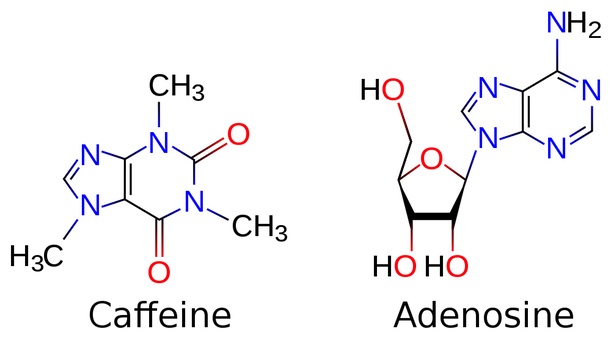
Structurally, caffeine closely resembles a molecule that’s naturally present in our brain, called adenosine (which is a byproduct of many cellular processes, including cellular respiration)—so much so, in fact, that caffeine can fit neatly into our brain cells’ receptors for adenosine, effectively blocking them off. Normally, the adenosine produced over time locks into these receptors and produces a feeling of tiredness.
Caffeine structurally resembles adenosine enough for it to fit into the brain’s adenosine receptors. Image via Wikimedia Commons
When caffeine molecules are blocking those receptors, they prevent this from occurring, thereby generating a sense of alertness and energy for a few hours. Additionally, some of the brain’s own natural stimulants (such as dopamine) work more effectively when the adenosine receptors are blocked, and all the surplus adenosine floating around in the brain cues the adrenal glands to secrete adrenaline, another stimulant.
For this reason, caffeine isn’t technically a stimulant on its own, says Stephen R. Braun, the author or Buzzed: the Science and Lore of Caffeine and Alcohol, but a stimulant enabler: a substance that lets our natural stimulants run wild. Ingesting caffeine, he writes, is akin to “putting a block of wood under one of the brain’s primary brake pedals.” This block stays in place for anywhere from four to six hours, depending on the person’s age, size and other factors, until the caffeine is eventually metabolized by the body.
In people who take advantage of this process on a daily basis (i.e. coffee/tea, soda or energy drink addicts), the brain’s chemistry and physical characteristics actually change over time as a result. The most notable change is that brain cells grow more adenosine receptors, which is the brain’s attempt to maintain equilibrium in the face of a constant onslaught of caffeine, with its adenosine receptors so regularly plugged (studies indicate that the brain also responds by decreasing the number of receptors for norepinephrine, a stimulant). This explains why regular coffee drinkers build up a tolerance over time—because you have more adenosine receptors, it takes more caffeine to block a significant proportion of them and achieve the desired effect.
This also explains why suddenly giving up caffeine entirely can trigger a range of withdrawal effects. The underlying chemistry is complex and not fully understood, but the principle is that your brain is used to operating in one set of conditions (with an artificially-inflated number of adenosine receptors, and a decreased number of norepinephrine receptors) that depend upon regular ingestion of caffeine. Suddenly, without the drug, the altered brain chemistry causes all sorts of problems, including the dreaded caffeine withdrawal headache.
The good news is that, compared to many drug addictions, the effects are relatively short-term. To kick the thing, you only need to get through about 7-12 days of symptoms without drinking any caffeine. During that period, your brain will naturally decrease the number of adenosine receptors on each cell, responding to the sudden lack of caffeine ingestion. If you can make it that long without a cup of joe or a spot of tea, the levels of adenosine receptors in your brain reset to their baseline levels, and your addiction will be broken

Saturday, August 17, 2013

Easy ways to add fruits and vegetables to dinner

Have a salad with dinner most days. Stock your salad with dark green leafy lettuce and toss in petite peas, tomatoes, onions, celery, carrots, and peppers. As an added benefit, starting meals with a salad can help you consume fewer calories at the meal, as long as the salad is no more than 100 calories. A healthful salad consists of about 3 cups of dark green lettuce, 1⁄2 cup carrots, a tomato, 1⁄4 cucumber, and 1 1⁄2 tablespoons of low-calorie dressing.

Choose fruit — fresh or frozen, stewed or baked — for dessert. It all counts toward your daily produce quota. Dried fruits are healthy but high in calories, so eat them sparingly

Roast vegetables. Roasting is a great way to let the deep, rich flavors of vegetables shine through. Bake cut vegetables at 375° F for 20 to 25 minutes or until they’re lightly browned. You can roast any vegetable — from mushrooms, onions, eggplant, and zucchini to tomatoes, broccoli, and carrots — so don’t limit yourself. Enjoy roasted veggies as a side dish or toss them into pasta dishes and other recipes.

Detox Superfoods

Detox is a natural, ongoing process of neutralizing and eliminating dietary and environmental toxins from the body. Certain foods can support, or even speed the process, by providing vitamins, antioxidants, minerals, essential fatty acids, fiber and other needed nutrients.

Pomegranate
Give yourself a serious antioxidant boost! Pomegranates are loaded with anthocyanins, a type of antioxidant that gives the seeds their deep, red color. It’s possible that anthocyanins may protect against DNA damage and inflammation and reduce the risk of heart disease, allergies, cancer, and diabetes. Preliminary research indicates that they may also help to slow skin aging by reducing the weakening of skin’s collagen and elastin fibers.

Arugula

A culinary staple in Mediterranean cooking, arugula is a type of cruciferous vegetable (like broccoli, kale, and watercress) that contain a number of compounds that aid in detoxification, such as sulforaphane and indole-3-carbinol. Arugula is also packed with vitamins and minerals such as vitamin K, vitamin C, magnesium and folate and the phytochemicals lutein and zeaxanthin, which may protect against age-related macular degeneration and cataracts.

Garlic

A detox favorite, garlic contains sulfur-containing compounds that may fight harmful bacteria and yeast in the intestines and boost the body’s ability to detox by increasing production of glutathione, needed for the elimination of certain toxins. The sulfur compounds, called allicin, are broken down in the body to allyl sulfides, which may guard against heart disease, certain types of cancer, arthritis and diabetes

Seaweed

A dietary staple in many Asian countries, seaweeds-such as dulse, kelp, nori, wakame, and agar- are becoming popular with good reason. They are packed with minerals such as iodine, which aids in the production of thyroid hormone and regulates our metabolism, calcium, magnesium and potassium. The high mineral content can help to flush toxins from the body. Certain seaweeds, such as arame and hijiki have plenty of soluble fiber, which also promotes detoxification.

Lemon

One of the most potent detox foods around, lemons are packed with vitamin C and are thought to help restore the alkaline-acid balance of the body, enabling us to more effectively remove dietary and environmental toxins.

Apples

Apples are high in insoluble fiber and the soluble fiber pectin, which soaks up toxins and waste and sweeps them through the intestines. They are low-glycemic, which means that they are absorbed slowly with a gradual rise in blood sugar and insulin. Apples contain glucaric acid, which helps the body get rid of estrogen-like chemicals and heavy metals.

Cabbage

One of the more affordable detox foods, cabbage has cleansing properties due to their high content of glucosinolates, sulfur-containing compounds that are converted into active forms isothiocyanates and indoles. Isothiocyanates may prevent cancer by promoting the elimination of potential carcinogens from the body. It is also high in vitamin K and vitamin C and ½ cup has only 11 calories.

Quinoa

Quinoa has been cultivated in South America for over 5000 years. Wheat-free and gluten-free, quinoa is a popular detox food and technically the seed of a plant (related to beets and spinach) rather than a whole grain. A protein powerhouse - one half cup of cooked quinoa has 3 grams of protein - quinoa has 50 percent more protein than grains and contains all nine essential amino acids, making it a complete protein similar to meat and other animal foods and a great food for people who follow a vegetarian or vegan diet.

Quinoa is also low on the glycemic index, meaning that it causes a gradual rise in blood sugar and insulin, and it is high in the amino acid lysine, which is involved in tissue repair.  

Wheatgrass

A popular ingredient at juice bars, wheatgrass is thought to have potent detoxifying abilities, being packed with chlorophyll, amino acids, vitamins, minerals, and enzymes.

Almonds

Almonds are actually fruit because they're the seeds of a fruit that is a close relative to the plum and peach. They're a detox essential because most detox diets don't include cow's milk, and almond milk is one of the best-tasting, most readily available plant-based alternatives. Almond milk can be made at home, or you can find it at many grocery stores and health food stores.

Almonds are also fantastic because they have a high vitamin E content (one ounce has 35% of the daily recommended intake), fiber (one ounce has 3 grams), vegetable protein (one ounce has 6 grams), and monounsaturated fats (almonds are 51% monounsaturated fat). They're also rich in magnesium, phosphorus, calcium, iron, folate, and phytochemicals, all of which may help prevent chronic diseases

Avocados

During the low-fat diet craze of the 1980s and 90s , avocados became an off-limits food because of their fat content. While they do contain a fair amount of fat, they are high in heart-healthy monounsaturated fat which won’t interfere with the balance of omega-3 to -6 fatty acids in the diet.

Fat is essential during a detox diet, because it promotes the release of bile from the gallbladder, allowing for the elimination of toxins from the body and the absorption of fat-soluble vitamins including vitamin A, vitamin D, vitamin E and vitamin K. Besides providing a desirable fat, avocados also contain vitamin E, folate, vitamin B5 and potassium. One half-cup of avocado has a whopping 8 grams of dietary fiber.

Blueberries

A true detox superfood, blueberries are packed with fiber and vitamin C, are low in calories (1/2 cup has 44 calories), and are one consistently ranked at the top when it comes to antioxidant capacity.

Blueberries get their blue color from antioxidant pigments called anthocyanins, which help protect cells from free radical damage, enhance glutathione production, and guard against heart disease, cataracts, glaucoma, peptic ulcers, Alzheimer’s disease, allergies, diabetes and certain cancers. Anthocyanins may also slow aging by reducing the breakdown of collagen and strengthening blood vessels and capillaries.

Ginger

No list of detox foods would be complete without ginger. A natural anti-inflammatory food, ginger also helps to ease nausea, improve digestion, and promote detoxification by speeding the movement of food through the intestines, thanks to compounds called gingerols and shogaols.

Cauliflower

Don’t let its lack of color fool you. Cauliflower makes our list of top detox foods because it is a cruciferous vegetable (a family that includes broccoli, cabbage and bok choy) that is high in phytochemicals called glucosinolates. These chemicals are broken down in the intestines to isothiocynates and indole-3-carbinol, compounds which regulate the body’s detoxification enzymes and protect against cancer

Parsley

Known primarily as a culinary herb, parsley contains vitamin C, chlorophyll, beta-carotene, vitamin K and folate, which are all needed by the body for detox. Parsley also raises glutathione levels and may guard against liver dysfunction due to insulin resistance.

Beets

Packed with potassium, folate, fiber and antioxidants, beets are a star detox food. Beets also contain betaine, a compound that has been found to lower the levels of several inflammatory markers, protect against liver damage, and help the liver process fats. It also contains the beautiful reddish-purple antioxidant pigment betacyanin, which is responsible for a host of health benefits and may provide anti-inflammatory, antioxidant, and detoxification support (notably supporting glutathione-dependent phase 2 detoxification). Beets are low in calories – 1/2 cup of beets contains 40 calories.

Green Tea

If you are trying to cut back on your coffee intake, green tea is a good substitute. It has some caffeine (about 15 to 40 mg per cup), but also contains epigallocatechin-3-gallate (EGCG). A potent antioxidant, EGCG may protect the liver against damage from toxins, prevent the oxidation of LDL cholesterol, and may help prevent heart disease and certain cancers.

Flaxseeds

Flaxseeds contain alpha-linolenic acid, a heart-healthy omega-3 fatty acid that appears to improve how the body uses insulin, the hormone that clears sugar from the bloodstream. They also have soluble and insoluble fiber, which helps the body’s detoxification by promoting bowel regularity and helping the body to eliminate excess toxins, cholesterol and waste. Flaxseeds are also an excellent source of manganese.

Fennel

Fennel, a root vegetable with a licorice flavor, is low in calories and is a good source of folate, potassium and antioxidants such as anethole, a phytochemical which has been found to reduce inflammation. It is also mildly diuretic, which may help with the removal of toxic substances from the body Half a cup of raw fennel has only 14 calories.